
Before the Desert Was a Desert – Fossils, Silence, and Stories from the Thar
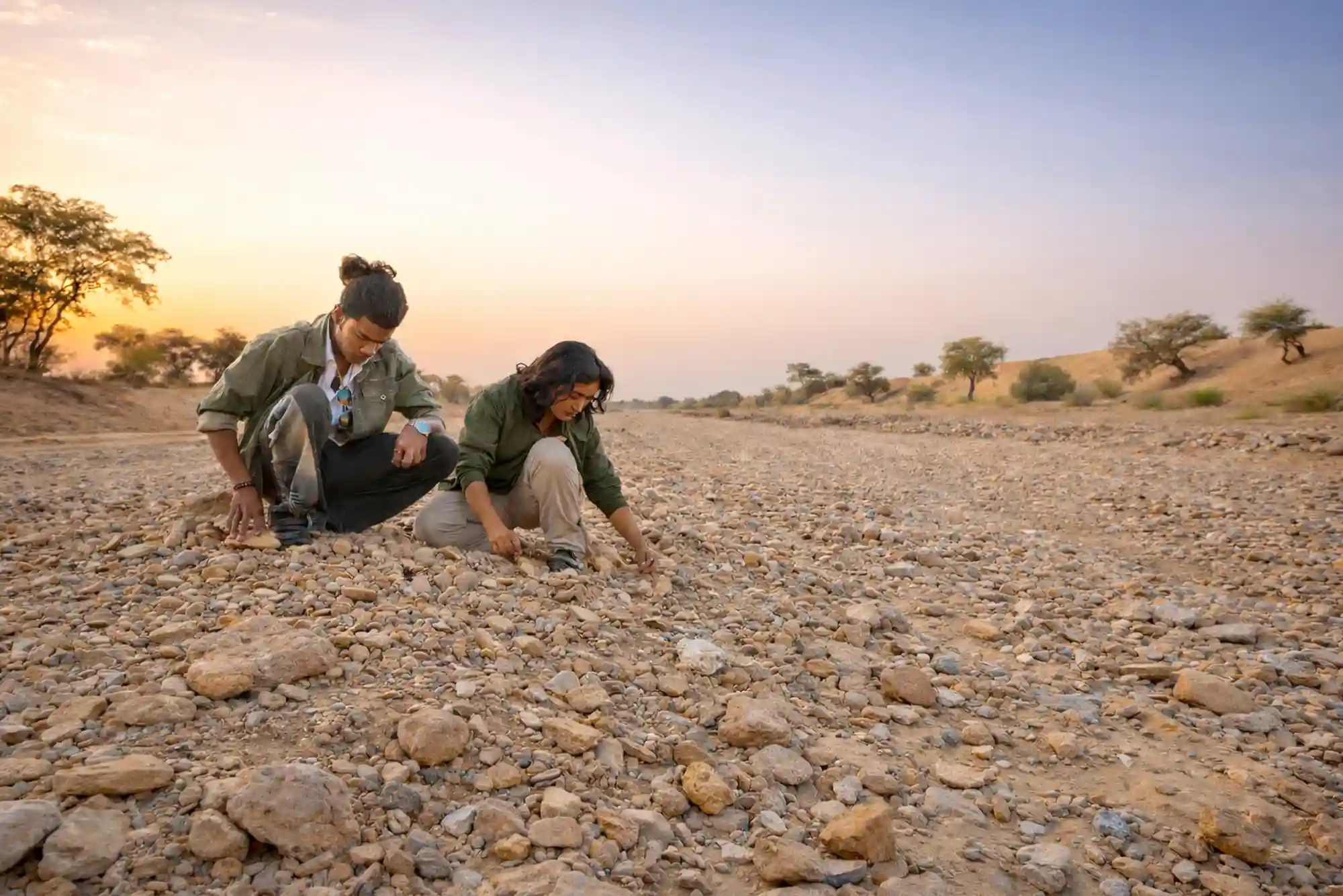
The desert looks permanent.
Endless. Unchanging.
But the Thar has not always been a desert.
Long before sand learned to move with the wind, before silence became its defining sound, this land held water. Oceans spread where dunes now rise. Life moved differently here—slower, wetter, softer.
The Thar remembers all of this. Quietly.
You just have to slow down enough to listen.
When the Thar Was Underwater
Millions of years ago, large parts of what we now call the Thar Desert were submerged beneath ancient seas. Geological shifts, climate changes, and the slow retreat of water reshaped the land over unimaginable spans of time.
What remained was not emptiness, but evidence.
Marine fossils. Shell impressions. Patterns locked into stone. These are not anomalies—they are clues, scattered patiently across the desert floor.
They tell a story that predates language.
Fossils as the Desert’s Memory
Fossils in the Thar are not dramatic relics announced by signboards. They are subtle.
A curve in rock that mirrors a shell.
A texture that feels deliberate.
A pattern that does not belong to sand alone.
These fossil trails across India, especially in Rajasthan’s desert regions, exist not as attractions, but as memories the land has chosen to keep.
Walking here feels less like exploration and more like recognition.
Silence That Carries Time
One of the most striking things about encountering fossils in the Thar is the silence around them.
There are no crowds. No echoing explanations. Just open land and long pauses.
This silence does something unusual—it stretches time.
Standing over something that existed millions of years ago recalibrates urgency. Human timelines shrink. Thoughts slow. You begin to understand why the desert never rushes.
It has already seen everything change.
Ancient Landscapes, Layer by Layer
The Thar is often described as harsh or empty, but that description only fits if you look at it briefly.
When you look longer, you begin to notice layers:
- Sand shaped by wind
- Stone shaped by water
- Fossils shaped by time
- Silence shaped by survival
Each layer belongs to a different era. Together, they form an ancient desert landscape that is far from lifeless.
It is simply patient.
Stories Written Without Words
The desert does not narrate its history loudly.
There are no plaques explaining which ocean once passed through, or which creatures lived here. Instead, the story exists in fragments—waiting for those willing to notice.
A fossil becomes a sentence.
A stone becomes a paragraph.
Silence becomes the space between words.
And in that space, understanding grows.
Why Fossil Trails Are Rarely Talked About
Despite their significance, fossil trails in India remain largely undocumented in popular travel narratives. They don’t fit neatly into itineraries built around speed or spectacle.
You can’t rush them.
You can’t package them loudly.
You can’t consume them quickly.
They ask for something most modern travel forgets to offer: time.
The Thar as a Teacher of Impermanence
Perhaps the most philosophical lesson the Thar offers is this: nothing stays the same.
Oceans become deserts.
Life shifts form.
Land transforms slowly, then completely.
Fossils are not reminders of death—they are reminders of continuity. That existence adapts, reshapes, and carries forward in ways we may not immediately recognise.
The desert, in this sense, is not barren. It is wise.
Walking Through History Without Disturbing It
To move through fossil-rich desert landscapes is to practise restraint.
You walk lightly.
You observe closely.
You choose carefully what to carry—if anything at all.
The experience is not about extraction. It is about connection. About letting the land reveal itself on its own terms.
This way of encountering history feels respectful, almost intimate.
Why This Matters for Conscious Travel
As travel shifts toward meaning and responsibility, places like the Thar demand a different approach.
Understanding desert history through fossils and landscapes deepens respect—for the land, for time, and for our small place within it.
This is not tourism that entertains.
It is travel that humbles.
Where These Stories Are Best Encountered
Near Kuldhara village, the desert still holds onto its quiet authority. Here, the land has not been over-interpreted or over-developed. Fossils rest where they always have. Silence remains intact.
It is in places like these that the Thar’s deeper stories surface—not through narration, but through presence.
A Quiet Invitation from Dreamtime Bungalows
At Dreamtime Bungalows, the only stay located within the historic village of Kuldhara, the desert is experienced not just as landscape, but as memory. Surrounded by ancient terrain, fossil-rich paths, and long silences, Dreamtime offers stays and experiences shaped by patience, respect, and slow discovery.
If you’re drawn to journeys that move beyond the visible—into history, geology, and reflection—Dreamtime invites you to begin here.
📍 Dreamtime Bungalows, Kuldhara — near Jaisalmer, Rajasthan
📞 +91-6367071565 | 📧 hello@dreamtimebungalows.com
Before the desert was sand, it was water.
Before it was quiet, it was alive.
And if you listen closely, it still is.
Recents Blog
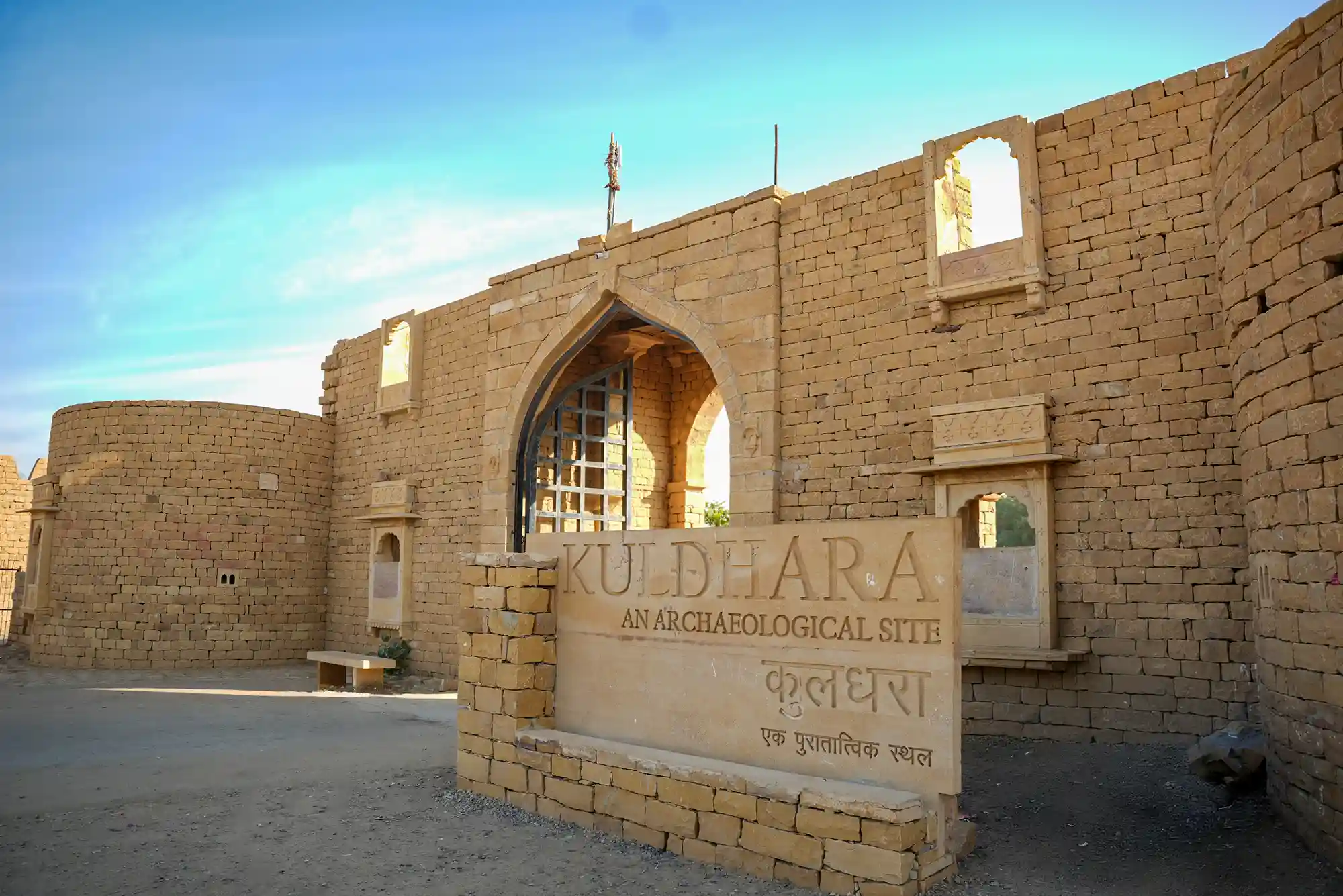
Is Kuldhara Really Haunted? Understanding the Myths Through Slow Travel
Is Kuldhara Really Haunted? Understanding the Myths Through Slow Travel Kuldhara is often spoken about in whispers.A village abandoned overnight.A...
Best Stargazing Experiences in Rajasthan’s Desert
Best Stargazing Experiences in Rajasthan’s Desert Most of us live under lit skies.Streetlights, buildings, vehicles, screens—night has been diluted into...
Digital Detox Travel in India – Why the Desert Is the Best Place to Disconnect
Digital Detox Travel in India – Why the Desert Is the Best Place to Disconnect Disconnection has become a luxury.Not...
Frequently Asked Questions
About Kuldhara
No. Millions of years ago, large parts of the Thar region were covered by ancient seas. Geological shifts and climate changes gradually transformed these water-rich landscapes into the desert we see today.
The Thar Desert contains marine fossils such as shell impressions and stone formations that indicate its underwater past. These fossils are subtle and often embedded naturally in the landscape.
Fossil trails can be found in parts of Rajasthan’s desert regions, particularly around less disturbed landscapes near villages like Kuldhara, where natural history remains largely untouched.
Fossil trails are often located in remote areas and require slow, mindful exploration. They don’t fit into fast-paced tourism models, which is why they remain underrepresented in mainstream travel narratives.
The Thar is considered an ancient landscape due to its layered geological history—shaped by oceans, wind, climate shifts, and time—preserving evidence of multiple eras within its terrain
Yes. Observing fossil-rich landscapes does not require technical expertise. It involves walking slowly, observing carefully, and respecting the land.
Understanding desert history through fossils encourages presence, patience, and reflection—key elements of slow travel—allowing travellers to engage deeply with place rather than rush through it.
Yes. Experiences related to fossil exploration and desert history are often enjoyed alongside a stay at Dreamtime Bungalows, the only stay located in Kuldhara village.
Book Your Stay With Us
Book Now & Enjoy the Luxury of Our Cottage!
Whether you’re here for a single night of stillness or a week-long escape into desert life — Dreamtime Bungalows is ready to host you.
Slow down. Breathe deep. Let the desert remind you how simple life can be.
Our Social Media :
The Perfect Winter Escape Awaits!
Cool desert mornings, warm bonfires, and nights under endless stars — book your winter stay at Dreamtime Bungalows.