
Geological History of the Thar Desert – When Rajasthan Was Underwater
The desert feels eternal.
Its silence suggests permanence. Its vastness feels final. Standing in the Thar, it’s easy to believe that this land has always been dry, always harsh, always shaped by wind and sand.
But the truth is far older—and far stranger.
Before the Thar was a desert, Rajasthan was underwater.
And the land remembers.
The Idea That Changes Everything
To understand the Thar Desert, you have to let go of one assumption: that deserts are born dry.
They aren’t.
The Thar is not an absence of water—it is the result of water leaving.
Millions of years ago, large parts of western Rajasthan were covered by ancient seas. What we now call desert was once seabed, shaped slowly by currents, pressure, and life beneath water.
This is not theory alone.
It is written into the land.
How Do We Know Rajasthan Was Underwater?
The evidence lies quietly across the desert.
Not in textbooks—but in stone.
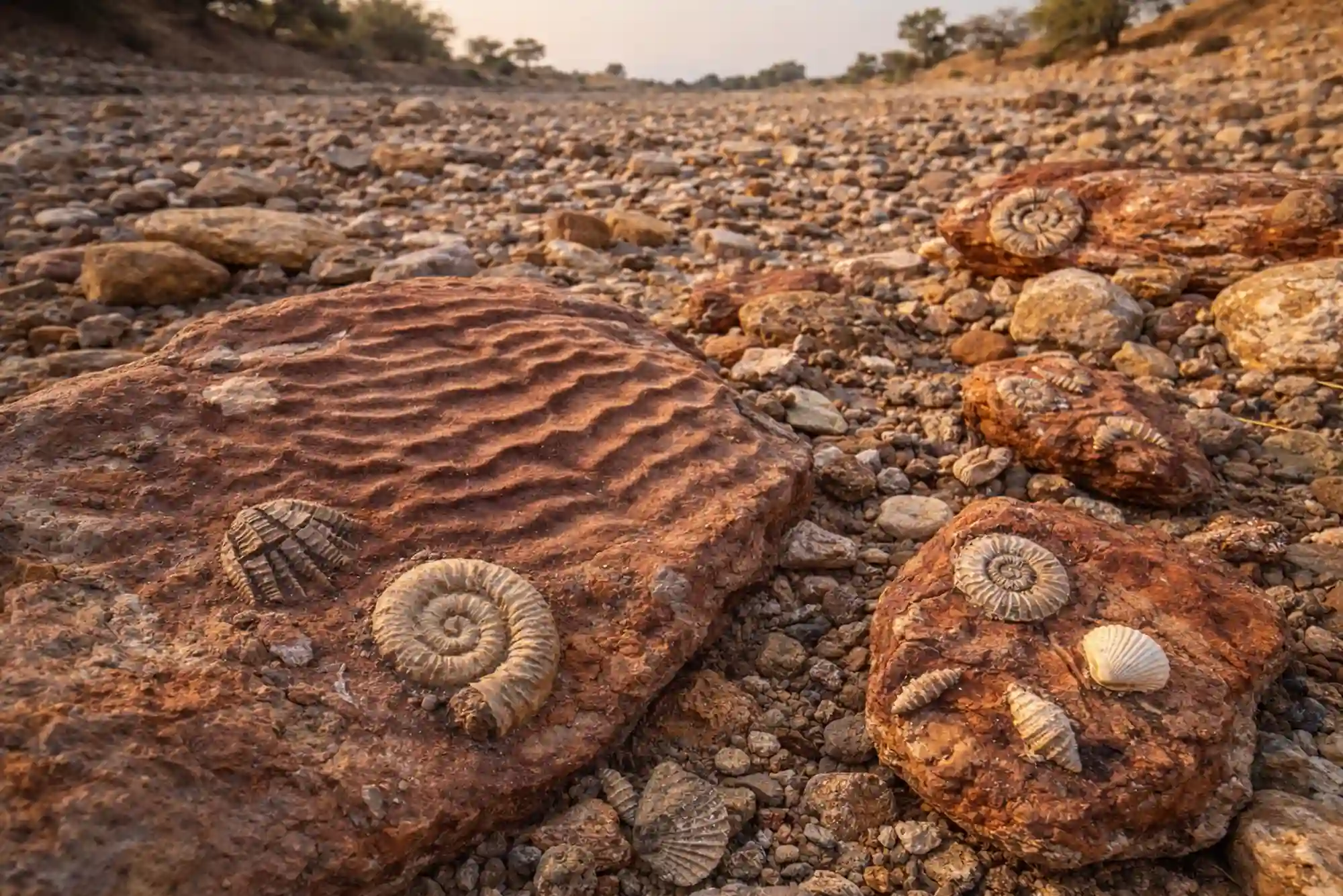
Marine fossils, shell impressions, coral-like structures, and sedimentary rock formations appear in regions that today receive barely any rainfall. These are not anomalies. They are geological records.
They tell us that:
- Oceans once stretched across this region
- Marine life thrived where dunes now stand
- Layers of sediment formed long before sand took over
The desert is not young.
It is transformed.
From Seabed to Sand: A Slow Evolution
The transformation from ocean to desert did not happen suddenly.
It took millions of years.
Tectonic movements altered land elevation. Climate patterns shifted. Water bodies receded gradually. Rivers changed course. Winds began shaping what water had left behind.
Each phase left a layer:
- Water shaped stone
- Stone resisted erosion
- Wind sculpted what remained
The Thar is a palimpsest—a landscape written over many times, never fully erased.
Fossils as Witnesses of Deep Time
Fossils found in and around the Thar are not dramatic skeletons laid bare. They are subtle, easily missed.
A curve in rock that mirrors a shell.
A repetitive pattern that resembles coral.
A texture that feels intentional, not random.
These fossils are reminders that life adapts—but land remembers.
They exist not to impress, but to persist.
Why the Thar Feels So Quiet
One of the most striking qualities of the Thar Desert is its silence.
This silence is not emptiness.
It is depth.
When you realise how much this land has already been—ocean, shoreline, wetland, riverbed—the quiet begins to feel earned. The desert is not waiting to become something else.
It has already been many things.
Ancient Landscapes Don’t Rush
The Thar does not reveal itself quickly.
It does not offer instant gratification. Its beauty lies in scale and patience—qualities formed over geological time.
This is why the desert feels incompatible with hurried travel. It asks you to slow down, because it was never shaped quickly itself.
The land teaches through duration, not drama.
Why This History Is Often Overlooked
Deserts are often framed as harsh, lifeless spaces.
But geological history complicates that narrative. It reminds us that landscapes are not defined by their present condition alone.
The Thar’s underwater past is rarely highlighted because:
- It doesn’t fit popular desert imagery
- It requires slowing down to understand
- It cannot be condensed into spectacle
But understanding this history changes how you relate to the land.
Standing on What Was Once an Ocean
There is something humbling about standing in the desert and knowing that waves once moved above you.
That creatures lived, fed, and died here.
That time has been layered, not erased.
The desert becomes less intimidating—and more intimate.
You stop seeing it as empty.
You start seeing it as complete.
Why Geological History Matters for Travel
When travellers understand a place’s deep history, behaviour changes.
You walk lighter.
You observe longer.
You take less.
Geology encourages humility. It reminds us that we are temporary visitors in a story still unfolding.
In the Thar, this awareness turns travel into listening.
Where This History Is Best Felt
Near Kuldhara village, the desert remains relatively undisturbed. The land has not been over-curated or aggressively explained. Fossil traces, stone formations, and silence exist without signage.
Here, geological history is not taught.
It is felt.
And that makes it more lasting.
A Quiet Invitation from Dreamtime Bungalows
At Dreamtime Bungalows, the only stay located within the historic village of Kuldhara, guests are surrounded by landscapes shaped by oceans, time, and patience. Through slow stays and immersive desert experiences, Dreamtime offers a way to encounter the Thar not just as a desert—but as a living record of Earth’s deep history.
If you’re curious about Rajasthan beyond palaces and sand dunes, and open to understanding the land beneath your feet, Dreamtime invites you to stay long enough to listen.
📍 Dreamtime Bungalows, Kuldhara — near Jaisalmer, Rajasthan
📞 +91-6367071565 | 📧 hello@dreamtimebungalows.com
The desert was not always dry.
And it is not as empty as it seems.
Recents Blog
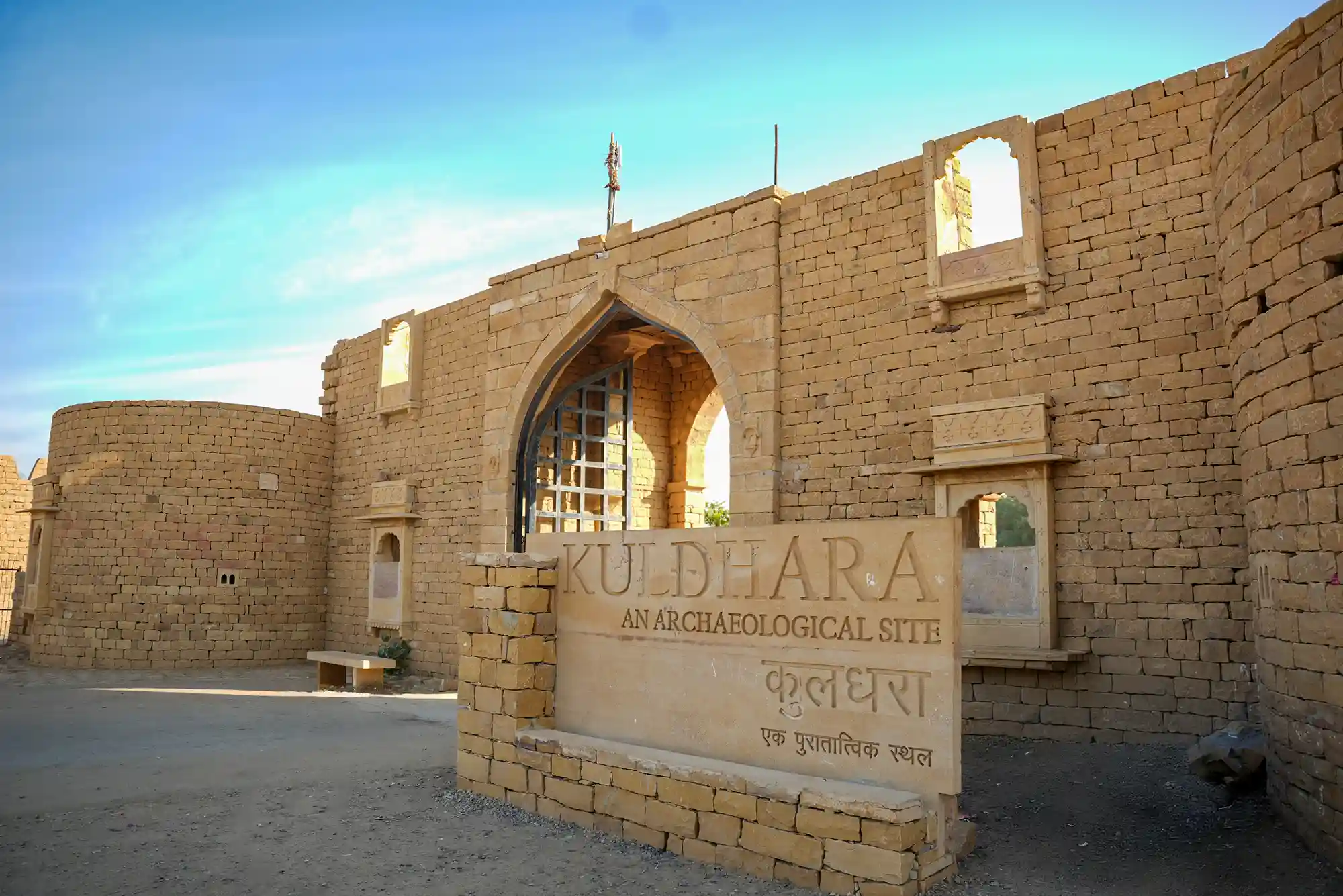
Is Kuldhara Really Haunted? Understanding the Myths Through Slow Travel
Is Kuldhara Really Haunted? Understanding the Myths Through Slow Travel Kuldhara is often spoken about in whispers.A village abandoned overnight.A...
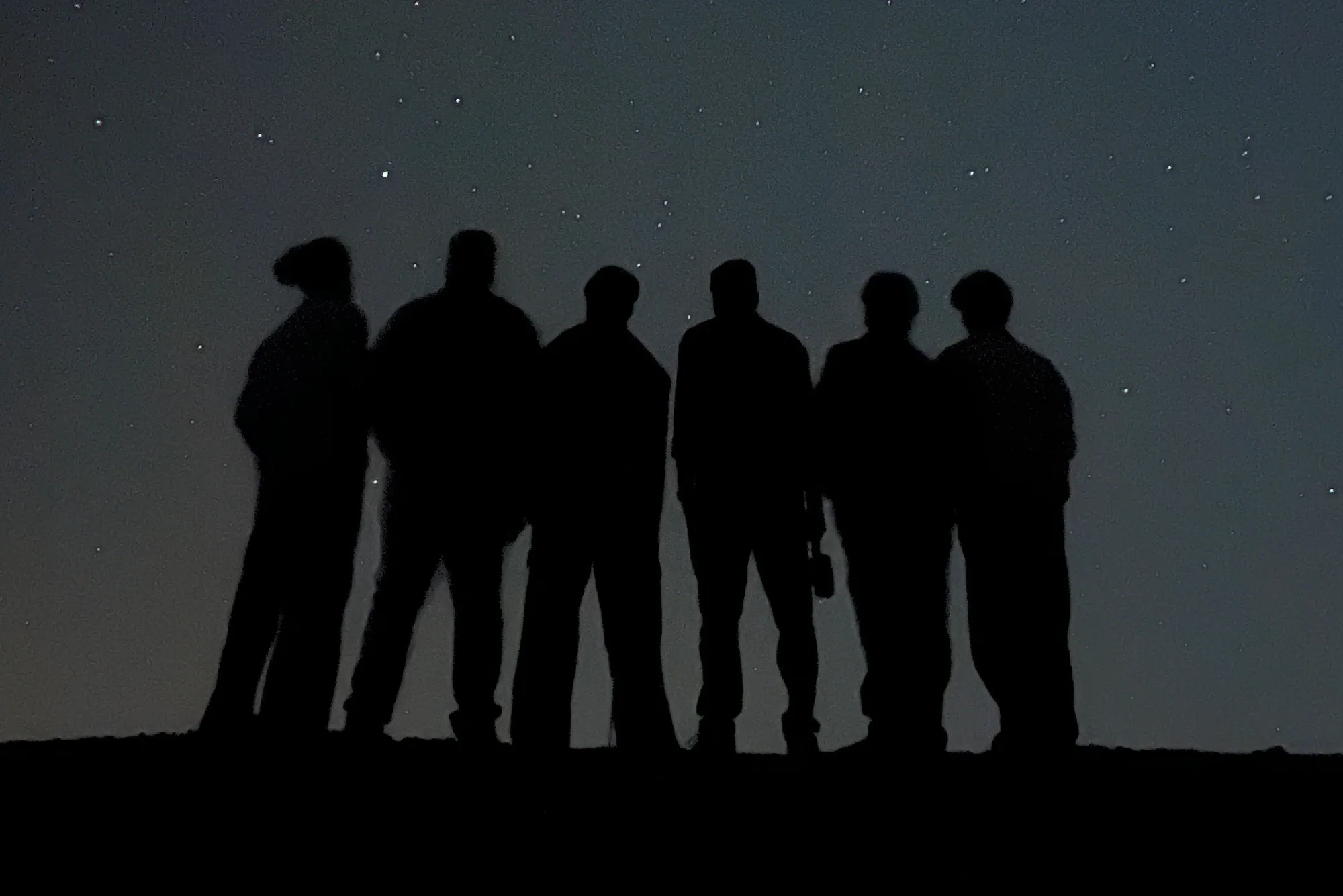
Best Stargazing Experiences in Rajasthan’s Desert
Best Stargazing Experiences in Rajasthan’s Desert Most of us live under lit skies.Streetlights, buildings, vehicles, screens—night has been diluted into...
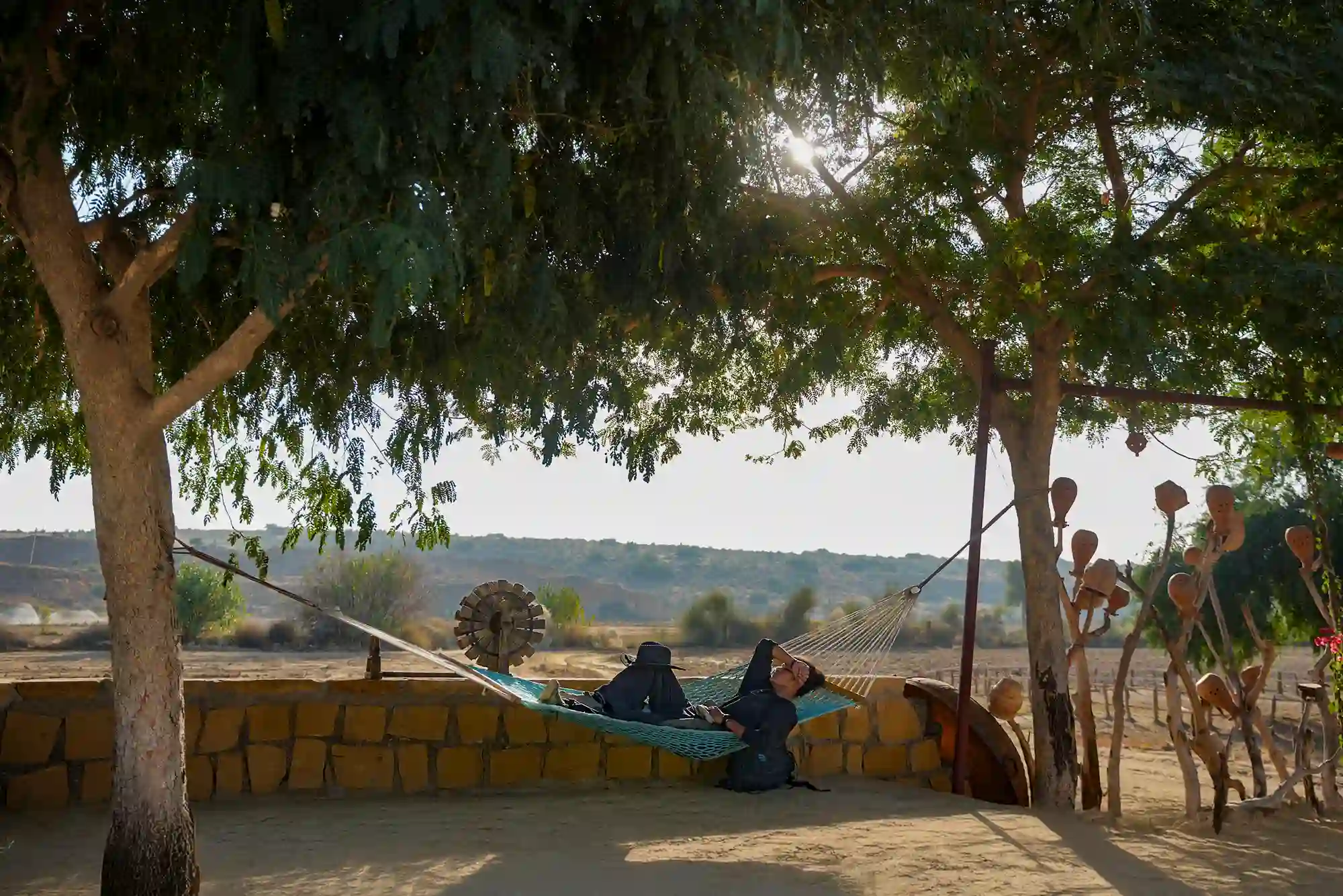
Digital Detox Travel in India – Why the Desert Is the Best Place to Disconnect
Digital Detox Travel in India – Why the Desert Is the Best Place to Disconnect Disconnection has become a luxury.Not...
Frequently Asked Questions
About Kuldhara
Yes. Millions of years ago, large parts of present-day Rajasthan, including the Thar region, were submerged under ancient seas. Geological evidence such as marine fossils and sedimentary rock formations confirms this.
The Thar Desert formed gradually as tectonic shifts, climate changes, and receding water bodies transformed seabeds and wetlands into arid land over millions of years.
Evidence includes marine shell impressions, coral-like patterns, sedimentary rocks, and fossil traces found in desert regions that indicate an underwater past.
The Thar’s silence reflects its deep geological history. Having undergone multiple transformations—from ocean to desert—the land carries a sense of scale and permanence shaped over time.
Yes. Fossil traces are often subtle but visible to those who observe carefully, especially in less disturbed areas near villages like Kuldhara.
The Thar is ancient because it has been shaped over millions of years by water, wind, and geological forces, preserving layers of Earth’s history within its terrain.
Understanding geological history encourages slower, more respectful travel. It helps visitors see landscapes as living records rather than empty spaces.
Yes. Guests staying at Dreamtime Bungalows, the only stay located within Kuldhara village, can explore desert landscapes shaped by deep geological history as part of their slow travel experience.
Book Your Stay With Us
Book Now & Enjoy the Luxury of Our Cottage!
Whether you’re here for a single night of stillness or a week-long escape into desert life — Dreamtime Bungalows is ready to host you.
Slow down. Breathe deep. Let the desert remind you how simple life can be.
Our Social Media :
The Perfect Winter Escape Awaits!
Cool desert mornings, warm bonfires, and nights under endless stars — book your winter stay at Dreamtime Bungalows.