
Walking Fossil Trails in India – Why the Desert Holds Earth’s Memory
Some landscapes speak in language.
Others speak in time.
The desert belongs to the second kind.
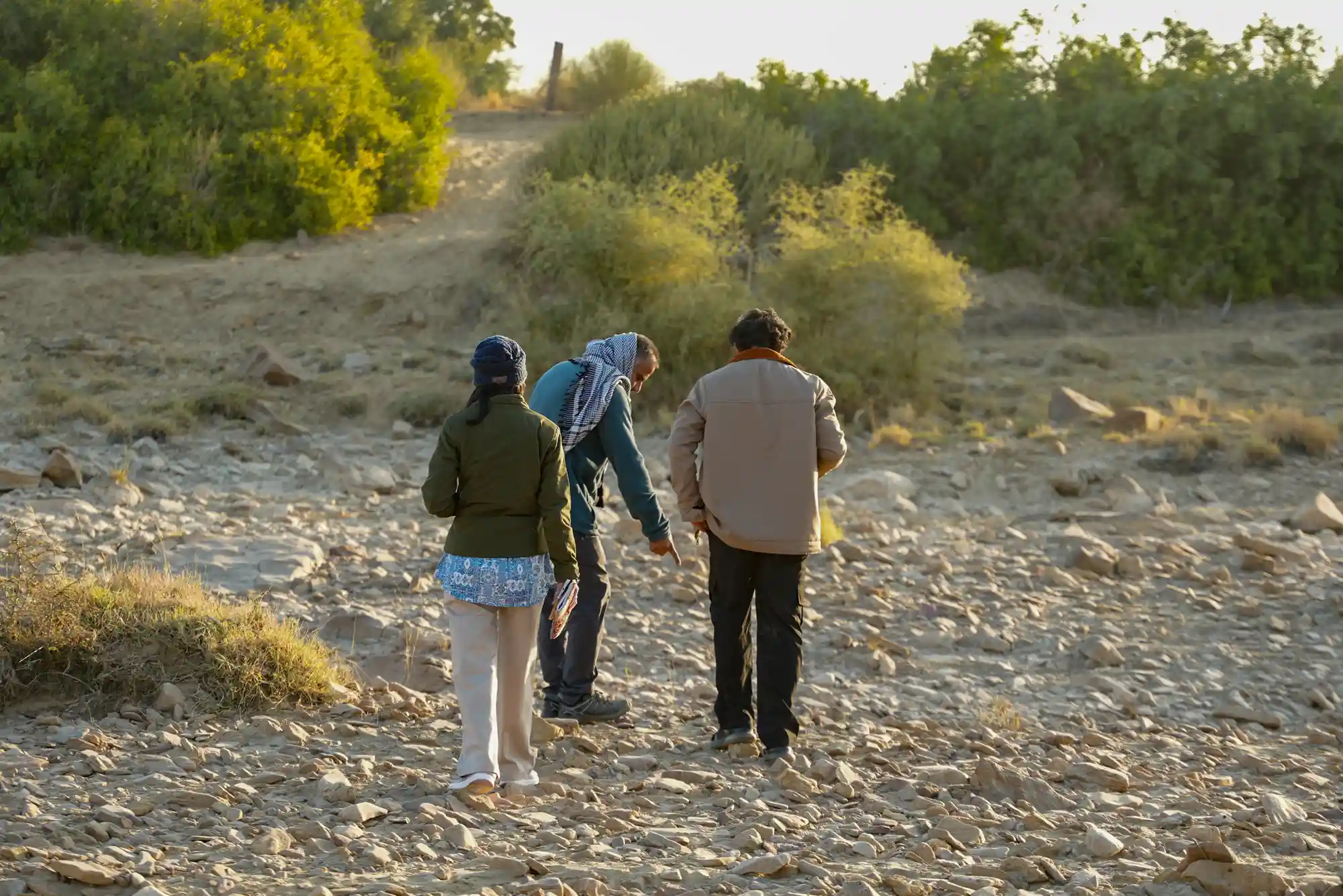
Walking through fossil-rich desert terrain in India is not like visiting a museum or reading a timeline. There are no labels explaining what you’re seeing. No glass cases protecting history from touch.
The land keeps its memory openly—quietly—waiting for those who know how to walk slowly enough to notice.
What Is a Fossil Trail, Really?
A fossil trail is not a marked route.
It isn’t a path laid out for tourists, nor a sequence of signboards explaining the past. Fossil trails exist organically—across stretches of land where ancient life has left impressions behind.
In India, many of these trails lie in desert regions, especially in Rajasthan, where erosion and aridity have exposed layers of deep time.
Here, fossils are not collected and displayed.
They are encountered.
Why Deserts Preserve Memory So Well
Deserts are often mistaken for empty places. In reality, they are places where change happens slowly.
Low rainfall, minimal vegetation, and long periods without disturbance allow geological features to remain exposed and intact. Where forests cover and rivers rearrange, deserts reveal.
This is why deserts hold memory so clearly:
- Water shaped the land long ago
- Wind reveals, rather than hides
- Time is allowed to layer, not overwrite
The desert doesn’t forget. It simply waits.
Fossils Without Drama
Unlike popular fossil imagery—large skeletons or dramatic discoveries—most fossils found on desert walks are subtle.
A shell curve embedded in stone.
A repetitive pattern that feels intentional.
A texture that doesn’t belong to sand alone.
You don’t stumble upon them.
You recognise them.
And that recognition changes how you walk.
Walking as a Way of Reading the Land
Fossil trails demand a different kind of movement.
You walk slower.
You stop often.
You look down, then far ahead, then back again.
Walking becomes an act of reading—interpreting what the land is showing rather than rushing to the next point.
In this way, geological walks are not about distance. They are about attention.
India’s Fossil Trails Beyond Textbooks
India’s geological history is vast, but rarely experienced physically by travellers. Fossil trails remain largely undocumented because they don’t fit neatly into conventional tourism.
They require:
- Patience instead of schedules
- Observation instead of explanation
- Curiosity instead of consumption
This is why many fossil-rich landscapes remain quiet—not because they lack significance, but because they resist spectacle.
What Fossils Teach Without Speaking
Standing over a fossil does something subtle.
It compresses time.
You realise that:
- Life existed here long before you
- Landscapes have changed completely—and will again
- Human presence is a moment, not a constant
Fossils do not make you feel small.
They make you feel placed.
Why Fossil Walks Are Philosophical Experiences
Fossil trails blur boundaries between science and reflection.
They invite questions:
- What does permanence mean?
- How does land adapt?
- What survives change?
Walking these trails is not about collecting answers. It’s about letting uncertainty settle comfortably.
In the desert, this feels natural.
Respecting What the Land Reveals
Encountering fossils comes with responsibility.
These are not souvenirs to gather thoughtlessly. They are fragments of Earth’s memory, revealed through chance and patience.
Walking fossil trails ethically means:
- Observing more than extracting
- Choosing carefully if you carry something
- Leaving the land largely unchanged
The experience matters more than possession.
Where Fossil Trails Are Best Felt
Near Kuldhara village, fossil-rich desert landscapes remain relatively undisturbed. There are no guided crowds, no scripted routes.
The land speaks quietly here—through stone, silence, and space.
This makes the experience intimate. Personal. Unrepeatable.
Fossils as Part of Slow Travel
Fossil walks align naturally with slow travel.
They can’t be rushed.
They don’t reward multitasking.
They ask for presence.
You return not with photographs alone, but with a recalibrated sense of time.
And that shift stays with you.
A Quiet Invitation from Dreamtime Bungalows
At Dreamtime Bungalows, the only stay located within the historic village of Kuldhara, fossil trails are experienced not as attractions, but as conversations with deep time. Surrounded by ancient desert landscapes, guests are invited to walk slowly, observe closely, and engage respectfully with Earth’s memory.
If you’re drawn to travel that moves beneath the surface—into geology, time, and reflection—Dreamtime offers space to begin that journey.
📍 Dreamtime Bungalows, Kuldhara — near Jaisalmer, Rajasthan
📞 +91-6367071565 | 📧 hello@dreamtimebungalows.com
Some paths don’t lead forward.
They lead backward—into time itself.
Recents Blog
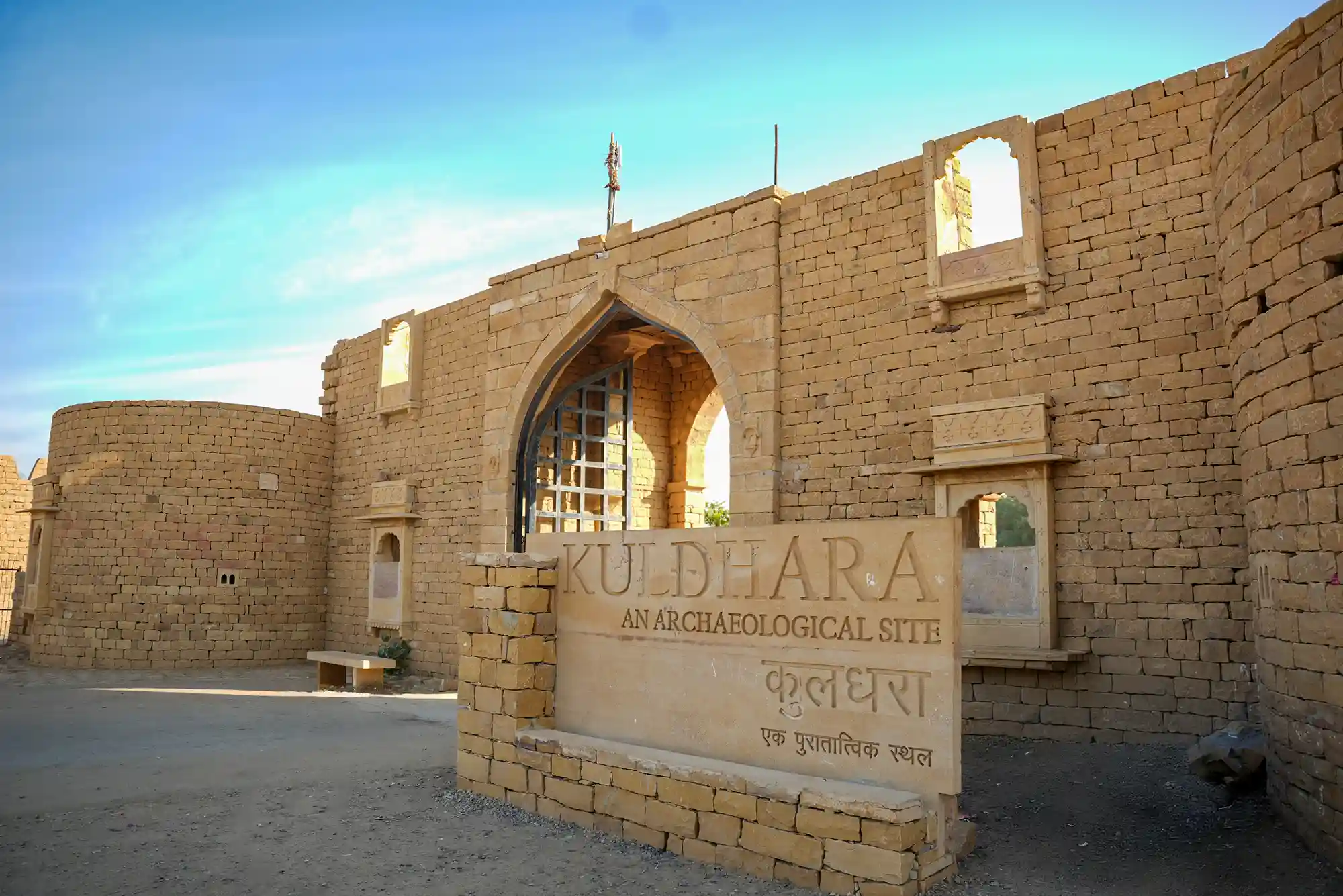
Is Kuldhara Really Haunted? Understanding the Myths Through Slow Travel
Is Kuldhara Really Haunted? Understanding the Myths Through Slow Travel Kuldhara is often spoken about in whispers.A village abandoned overnight.A...
Best Stargazing Experiences in Rajasthan’s Desert
Best Stargazing Experiences in Rajasthan’s Desert Most of us live under lit skies.Streetlights, buildings, vehicles, screens—night has been diluted into...
Digital Detox Travel in India – Why the Desert Is the Best Place to Disconnect
Digital Detox Travel in India – Why the Desert Is the Best Place to Disconnect Disconnection has become a luxury.Not...
Frequently Asked Questions
About Kuldhara
Fossil trails in India are natural landscapes where ancient life has left visible impressions in stone. These trails are unmarked and discovered through slow, mindful walking rather than guided routes.
Many fossil trails are found in desert regions of Rajasthan, especially in less disturbed areas where erosion has exposed ancient geological layers.
Fossils are often subtle—shell impressions, coral-like textures, and patterned stone formations that indicate ancient marine life rather than large skeletal remains.
Deserts preserve fossils well due to low rainfall, minimal vegetation, and slow rates of landscape change, allowing geological features to remain exposed.
Yes. Fossil walks do not require technical knowledge. They involve careful observation, patience, and respect for the land rather than scientific expertise.
While observing fossils is encouraged, collecting should be done responsibly and sparingly, respecting local guidelines and the cultural and geological value of the land.
Fossil trails naturally encourage slow travel by requiring presence, attentiveness, and reflection rather than speed or checklist-driven exploration.
Yes. Guests staying at Dreamtime Bungalows, the only stay located within Kuldhara village, can explore nearby fossil-rich desert landscapes as part of their immersive desert experience.
Book Your Stay With Us
Book Now & Enjoy the Luxury of Our Cottage!
Whether you’re here for a single night of stillness or a week-long escape into desert life — Dreamtime Bungalows is ready to host you.
Slow down. Breathe deep. Let the desert remind you how simple life can be.
Our Social Media :
The Perfect Winter Escape Awaits!
Cool desert mornings, warm bonfires, and nights under endless stars — book your winter stay at Dreamtime Bungalows.