
Traditional Textile Arts of Rajasthan Beyond Bandhani and Block Prints
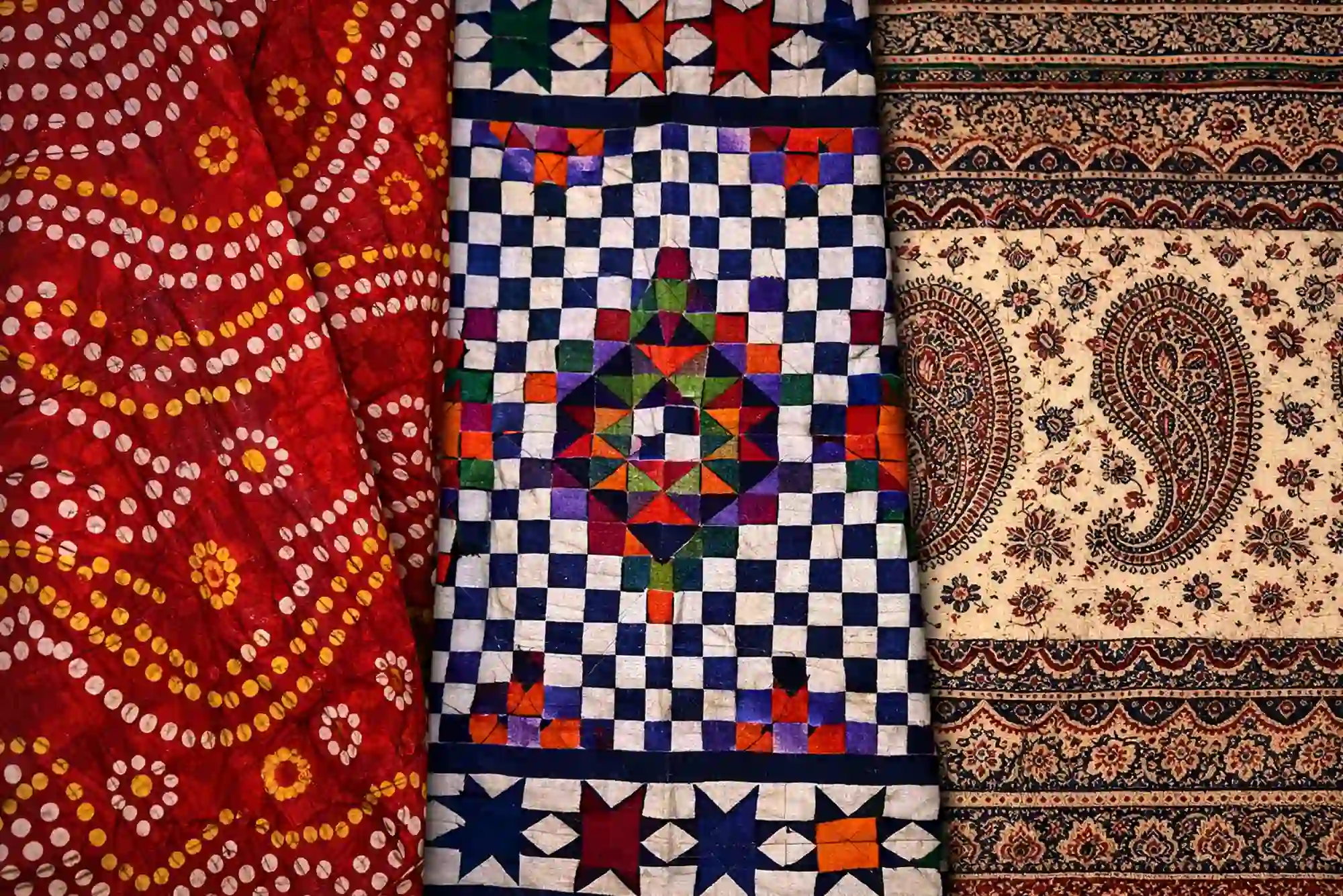
When Rajasthan’s textile heritage is discussed, two names dominate almost every conversation—Bandhani and block prints.
They are vibrant, recognisable, and widely celebrated. But they are also just the most visible threads in a much larger fabric.
Beyond markets, museums, and popular narratives exists a quieter textile tradition—one shaped not by commerce, but by climate, memory, migration, and everyday survival. These textile arts were not made to be sold or showcased. They were made to be lived with.
To understand Rajasthan’s textile legacy fully, one must look beyond what is famous—and pay attention to what endured quietly.
Textiles in the Desert: Necessity Before Aesthetics
In Rajasthan’s desert regions, textiles were never ornamental luxuries.
They served essential purposes:
- Protection from extreme heat and cold
- Insulation during desert nights
- Identification of community and lineage
- Objects of inheritance and continuity
Fabric was precious. Nothing was wasted. What wore out was repaired. What could not be repaired was repurposed.
Beauty emerged as a result of care—not excess.
Patchwork Traditions and the Wisdom of Reuse
One of the most profound textile practices in Rajasthan is patchwork, particularly among desert communities.
Among Sindhi communities, this practice took the form of Raalli (Ralli)—hand-stitched quilts made by assembling fragments of worn garments. Each piece carried traces of previous lives: a sleeve, a sari border, a child’s kurta.
Raallis were not casual crafts. They were:
- Made over months, sometimes years
- Passed from mothers to daughters
- Used as bedding, floor coverings, and ceremonial gifts
They represented patience, continuity, and emotional labour.
Embroidery as a Cultural Language
In many desert communities, embroidery was not decoration—it was communication.
Motifs, stitch styles, and colour combinations conveyed:
- Regional identity
- Community belonging
- Marital or life stage
- Occasion or ritual
Women learned this language informally—by observing elders, practising daily, and stitching for their own households. There were no patterns, no instructions, no corrections—only repetition and memory.
Each piece was unique because each life was.
Weaving Traditions Rooted in Geography
Rajasthan’s textile diversity also comes from its varied geography.
Different regions developed different weaving sensibilities:
- Coarse, durable weaves for daily use
- Lightweight fabrics for extreme heat
- Dense stitching for insulation during winter nights
Textiles responded directly to environment. They were not abstract art forms; they were practical solutions refined over generations.
Dowry, Memory, and Textile Inheritance
In many communities, textiles formed an important part of dowry—not as display items, but as emotional security.
A daughter leaving her home carried with her:
- Quilts stitched by female relatives
- Embroidered pieces made over years
- Objects meant to comfort, protect, and remind
These textiles became companions in new households, holding memory when distance grew.
Why Many Textile Arts Were Never Named
One reason so many Rajasthani textile traditions remain unknown is simple:
they were never meant for markets.
They belonged to homes, not exhibitions.
They circulated within families, not economies.
They carried meaning, not branding.
Only when certain crafts became commercially viable did they receive recognition. Others remained invisible—and vulnerable.
The Impact of Modernisation and Market Pressure
As production shifted toward speed and uniformity, traditional textile practices began to struggle.
Handmade crafts were replaced by:
- Machine stitching
- Digital prints
- Synthetic materials
The problem was not just replacement—it was devaluation. The time, skill, and emotional labour invested in handmade textiles rarely translated into fair market value.
As a result, younger generations often moved away from these practices in search of more sustainable livelihoods.
Why These Textile Arts Matter Today
Traditional textile arts hold lessons that feel urgently relevant today:
- Sustainability through reuse
- Slowness over speed
- Emotional durability over visual novelty
They remind us that craft once emerged from care, not consumption.
Understanding these traditions requires time, attention, and humility—qualities modern life often discourages.
Encountering Living Craft Through Travel
The most meaningful way to experience Rajasthan’s textile heritage is not through shopping—but through staying.
In desert regions, these textiles still appear quietly:
- As quilts on beds
- As floor coverings
- As everyday household objects
They are not labelled or explained. They exist naturally, as part of daily life.
Travel allows you to encounter craft as a lived practice—not a curated product.
Craft, Landscape, and Identity
Rajasthani textiles mirror their environment.
Colours echo earth, sky, and stone.
Patterns reflect repetition found in dunes and desert architecture.
Materials respond to climate and scarcity.
To understand the desert, one must understand how people clothed themselves within it.
A Quiet Invitation from Dreamtime Bungalows
At Dreamtime Bungalows, the only stay located within the historic village of Kuldhara, traditional textile arts are not showcased as décor—but integrated as part of lived space. Handmade quilts, stitched pieces, and craft elements reflect the desert’s relationship with reuse, patience, and memory.
For those curious about Rajasthani textile arts beyond Bandhani and block prints, Dreamtime offers an opportunity to observe craft where it still belongs—in everyday life.
📍 Dreamtime Bungalows, Kuldhara — near Jaisalmer, Rajasthan
📞 +91-6367071565 | 📧 hello@dreamtimebungalows.com
Some crafts are meant to be sold.
Others are meant to be carried—across generations, across landscapes, across time.
Recents Blog
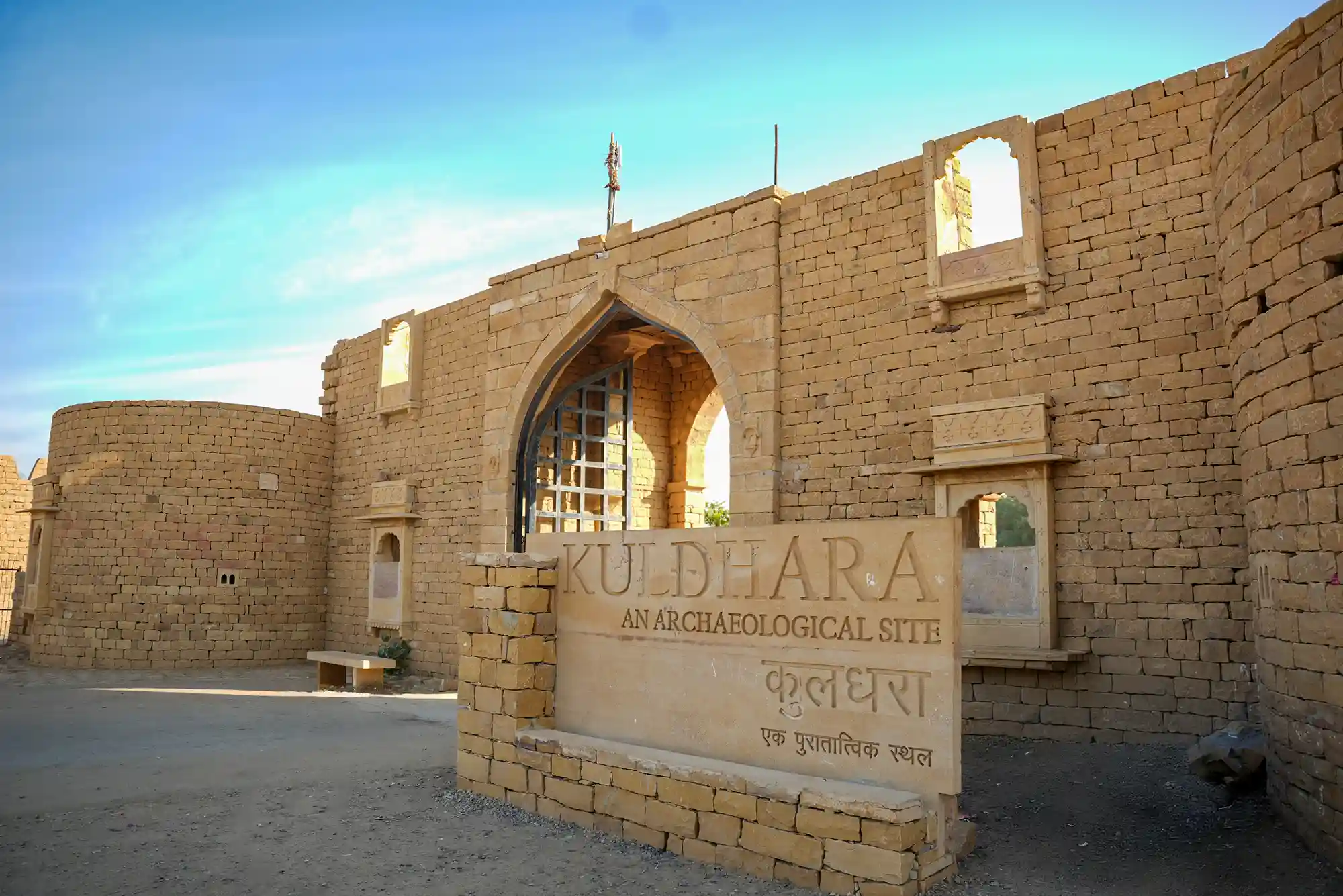
Is Kuldhara Really Haunted? Understanding the Myths Through Slow Travel
Is Kuldhara Really Haunted? Understanding the Myths Through Slow Travel Kuldhara is often spoken about in whispers.A village abandoned overnight.A...
Best Stargazing Experiences in Rajasthan’s Desert
Best Stargazing Experiences in Rajasthan’s Desert Most of us live under lit skies.Streetlights, buildings, vehicles, screens—night has been diluted into...
Digital Detox Travel in India – Why the Desert Is the Best Place to Disconnect
Digital Detox Travel in India – Why the Desert Is the Best Place to Disconnect Disconnection has become a luxury.Not...
Frequently Asked Questions
About Kuldhara
Beyond Bandhani and block prints, Rajasthan has a wide range of textile traditions including patchwork (Raalli), hand embroidery, reuse-based quilting, coarse weaves, and region-specific stitching practices shaped by desert life and necessity.
Many textile traditions were created for domestic use rather than trade. They belonged to homes, dowries, and daily life, which kept them outside formal markets and branding systems.
Scarcity of resources, extreme temperatures, and long distances encouraged reuse, durability, insulation, and functional beauty—leading to patchwork, layering, and hand stitching techniques.
Raalli is a traditional Sindhi patchwork textile made from reused fabric pieces. It holds deep cultural value, often created as dowry pieces or family gifts passed across generations.
The rise of machine production, digital prints, and faster manufacturing has made time-intensive handwork economically unsustainable, leading many artisans to abandon the craft.
Hand-stitched quilts and embroidered textiles were often part of a daughter’s dowry, serving as emotional anchors and practical support in her new household.
They offer lessons in sustainability, patience, reuse, and cultural identity—values increasingly relevant in an age of fast fashion and overconsumption.
The most authentic way is through travel—by staying in places where these textiles are still used daily rather than displayed as commercial products.
Yes. At Dreamtime Bungalows, the only stay located within Kuldhara village, traditional textiles like hand-stitched quilts and craft elements are integrated into living spaces, reflecting the desert’s cultural heritage.
Book Your Stay With Us
Book Now & Enjoy the Luxury of Our Cottage!
Whether you’re here for a single night of stillness or a week-long escape into desert life — Dreamtime Bungalows is ready to host you.
Slow down. Breathe deep. Let the desert remind you how simple life can be.
Our Social Media :
The Perfect Winter Escape Awaits!
Cool desert mornings, warm bonfires, and nights under endless stars — book your winter stay at Dreamtime Bungalows.